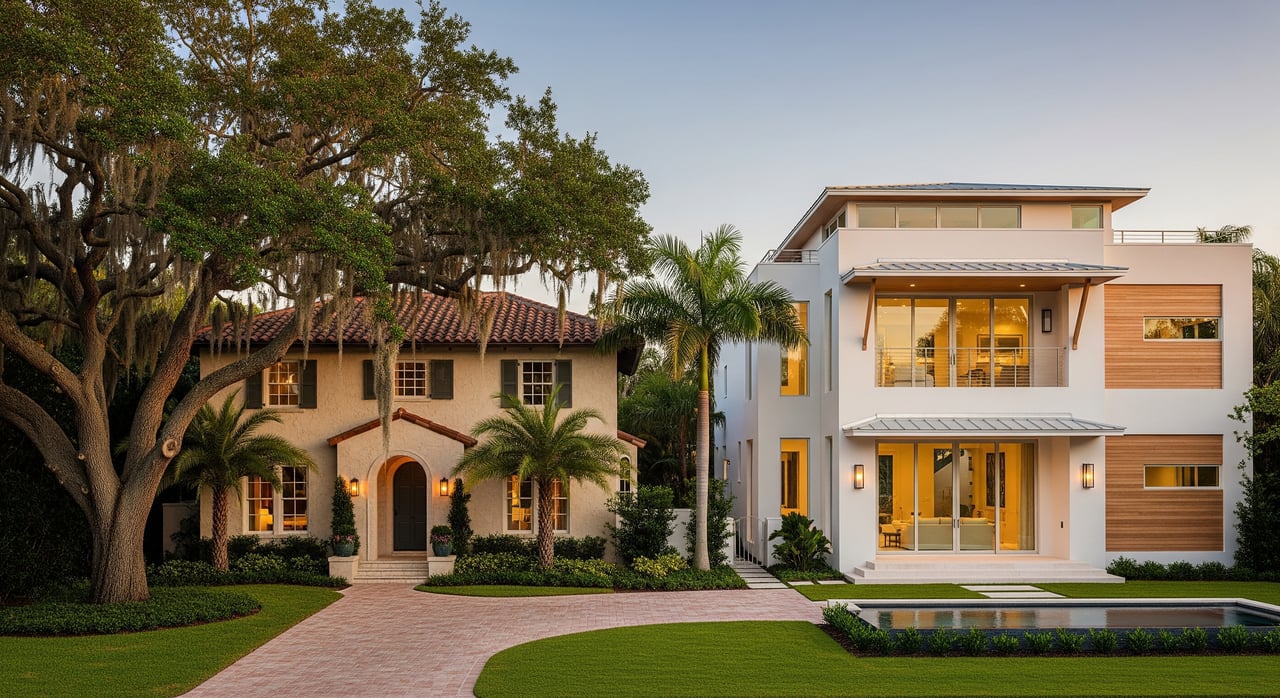
Thinking about whether a newer or older home in Plantation, Sarasota is the right fit for you? It can feel like a big choice, especially when you factor in maintenance, insurance, energy bills, and upgrade timelines. You want a home that fits your budget today and stays manageable tomorrow. In this guide, you’ll learn how age impacts costs and what trade-offs to expect so you can move forward with clarity. Let’s dive in.
Plantation home eras to know
Understanding when a home was built helps you predict common systems, materials, and likely updates.
- Pre-1970: Smaller footprints, single-pane windows, minimal attic insulation, and many original plumbing or electrical systems.
- 1970s to 1999: Central A/C is typical, asphalt shingle roofs, 100–150 amp panels, copper or early CPVC plumbing, slab foundations.
- 2000 to 2014: Built under the statewide Florida Building Code, with improved wind resistance, better insulation, and more double-pane or vinyl windows.
- 2015 to present: Higher wind and energy standards, impact-resistant glazing more common, PEX plumbing, higher-efficiency HVAC, and more solar-ready designs.
Florida adopted the statewide code in 2002, then updated it on a regular cycle. Homes built under later editions usually include stronger wind-load features and better energy performance. You can learn more about the code framework from the Florida Building Commission.
In coastal Sarasota conditions, salt air and seasonal storms can speed up wear compared with inland areas. That is true across ages, so maintenance history matters as much as the build year.
Maintenance cycles to expect
Age sets expectations for when big systems will need attention. Use these general ranges to plan ahead.
Roofs
Asphalt shingles typically last 15 to 25 years, architectural shingles about 20 to 30, concrete or tile 30 to 50 plus, and metal 30 to 60 plus depending on the system. In our area, wind, UV, and salt air are common stressors. Ask for the roof age, permits, and receipts, and plan a roof inspection if the roof is 10 years or older. Insurers often check roof age closely.
HVAC systems
Central A/C systems generally last 12 to 20 years, although coastal exposure and heavy use can shorten their life. Older units may use R‑22 refrigerant, which is no longer produced. That can make repairs costly and push you toward replacement. Upgrading to a higher SEER unit can improve comfort and lower bills.
Water heaters and plumbing
Traditional tank water heaters often last 8 to 15 years. Older plumbing materials like galvanized steel can corrode, while polybutylene from the 1980s to 1990s is known to be problematic. Many homes from the 2000s forward use copper, CPVC, or PEX, which are more reliable. If you see leaks or low water pressure, ask about repiping.
Electrical systems
Older homes may have smaller service panels, outdated breakers, or even aluminum branch wiring in some mid-century properties. Modern homes usually have 150–200 amp service and better protection devices. Panel upgrades, GFCI and AFCI protection, and rewiring can be required by lenders or insurers in certain cases.
Windows and doors
Single-pane windows can last but offer less wind resistance and insulation. Double-pane units typically last 20 to 30 years. Many older homes lack impact protection. Retrofitting with impact glass or shutters adds safety and can help with insurance.
Structure, corrosion, and pests
Most homes here use slab-on-grade foundations. Look for slab cracks, settlement, and moisture issues. Salt air can corrode exterior metals and pool equipment. Termites and other wood-destroying organisms are common in Florida, so regular inspections and treatments are part of responsible ownership. To understand what to watch for, review termite guidance from UF/IFAS Extension.
Pools and lanais
Screen enclosures, pool plumbing, and equipment often need periodic maintenance or replacement in coastal conditions. Factor these into your long-term plan.
Insurance and flood factors
Insurance costs and availability can vary by age and condition.
- Wind mitigation: Homes with features like roof-to-wall connectors, secondary water barriers, and impact protection may qualify for premium discounts. Older homes often lack some of these features.
- Roof age: Carriers often require a roof in good condition and may limit coverage or renewals for older roofs.
- Electrical and plumbing: Outdated systems can raise underwriting concerns. Fix known hazards early.
Flood risk depends on your exact location and elevation. Many Sarasota properties require flood insurance if you use a federally backed mortgage. Check zones through the FEMA Flood Map Service Center, and ask the seller if an elevation certificate is available. FEMA’s pricing approach, known as Risk Rating 2.0, uses more property-specific data, so premiums can change compared with older methods.
For broader guidance on home and flood insurance, review consumer resources from the Florida Department of Financial Services.
Costs and trade-offs by age
Here is how to think about the money side in Plantation, Sarasota.
- Older homes: You may pay a lower purchase price and get mature landscaping and character. You will likely face higher near-term expenses, such as a roof or HVAC replacement, plumbing upgrades, impact protection, and possible panel or wiring updates. Insurance can be higher without wind-mitigation features.
- Newer homes: You may pay a higher purchase price, but you often get stronger wind resistance, better insulation, newer systems, and lower energy use. Insurance may be more favorable if the home meets more recent code standards. The trade-off is a larger mortgage and possible HOA fees.
Focus on the life-cycle timeline. If the roof has 5 to 7 years left and the A/C is near 15 years old, those two items can hit your budget in the first few years. On the other hand, a newer home might stretch your monthly payment but reduce surprise repairs.
To compare options fairly, request quotes from local contractors before you finalize your offer. Do the same with insurance. Real numbers beat assumptions.
Smart energy upgrades that pay off
In Sarasota’s climate, cooling drives a big part of your utility bill. These upgrades have the most impact:
- Attic insulation and air sealing. Reducing heat gain lowers cooling needs.
- High-efficiency A/C plus duct sealing. This improves comfort and lowers kilowatt-hour use.
- Impact windows or shutters. These improve safety and can help with insurance.
- Smart thermostats and LED lighting. Smaller but steady savings.
- Solar PV. Consider roof age and orientation, then check permitting and HOA rules.
For general guidance on home efficiency and weatherization, start with Energy Saver from Energy.gov. Federal credits for residential clean energy technologies are available; review current details directly from the IRS before estimating your savings.
Buyer due diligence checklist
Use this list to protect your budget and timeline.
- Hire a licensed inspector with Florida coastal experience, and add wind-mitigation, roof, termite, and pool checks as needed. See consumer pointers from ASHI.
- Ask for roof age, warranty details, permits, and replacement receipts. If the roof is over 10 years old, schedule a roofing contractor assessment.
- Request HVAC service history and confirm the refrigerant type. Plan for replacement if the unit is near end of life.
- Verify plumbing materials and check for leaks or low pressure. Consider a camera inspection for drain lines if concerns arise.
- Confirm electrical panel size and protection devices, and ask about any aluminum wiring.
- Pull permit history for additions or major renovations. Avoid surprises from unpermitted work.
- Check flood zone status and, if applicable, get an elevation certificate and a flood insurance quote.
- Request termite inspection reports and treatment history.
- If there is an HOA, review covenants for rules on roofing, solar, windows, and renovations.
Seller prep tips that build confidence
If you are listing an older or mid-life home, a little preparation helps buyers feel at ease.
- Gather maintenance records for roof, HVAC, water heater, plumbing, and electrical work.
- Consider pre-list inspections for roof, HVAC, and termite. Address simple items and be ready to disclose.
- Document wind-mitigation features such as impact windows, roof ties, or secondary water barriers.
- Disclose any known unpermitted work and consult with closing professionals about remedies.
How to choose what is right for you
There is no one-size-fits-all answer in Plantation, Sarasota. If you value lower upfront maintenance and potential insurance advantages, a newer home may be the fit. If you want a lower purchase price and you are comfortable planning for roof, HVAC, and impact upgrades, an older home can work well too.
Be methodical. Compare the purchase price plus the first five to ten years of likely replacements. Gather insurance quotes based on roof age and mitigation features. Look hard at flood zone status and elevation. Then choose the home that gives you the most predictable costs and the lifestyle you want.
If you want help weighing trade-offs or lining up inspectors and quotes, reach out. You can plan with confidence and move forward on your timeline. Connect with christian cevallos to start a quick, no-pressure conversation.
FAQs
Will an older Plantation Sarasota home cost more to insure?
- It can. Carriers look at roof age, wind-mitigation features, electrical and plumbing risks, and flood exposure, so missing mitigation or older roofs may increase premiums.
How much should I budget for big-ticket items in an older home?
- Plan for roof or HVAC replacements if they are near the end of their life, potential plumbing or electrical upgrades, and hurricane protection if you do not have it; get local quotes.
Do newer homes always have a lower total cost of ownership?
- Not always. Newer homes often have fewer near-term repairs and lower energy use, but a higher price and possible HOA fees can offset savings; compare life-cycle costs.
What changed with flood insurance pricing in Sarasota?
- FEMA’s Risk Rating 2.0 uses property-specific factors, which can raise or lower premiums versus older methods; flood maps and elevation still matter for decisions.